
Graduation Requirements
To become eligible for a bachelor of medicine and surgery (M.B.Ch.B), a student must fulfill the academic status which includes the following requirements:
- passing the six academic years successfully within the maximum allowed period of study
- Should perform a research project.
- The final year contains only clinical training in the 4 clinical departments and the final exam include written, OSCE, and oral exams for the whole 6 year program.
Graduate Attributes of Al Kindy College of Medicine and Their Link to Educational Outcomes
Graduate Attributes
This page presents the Graduate Attributes of Al-Kindy College of Medicine and the Intended Learning Outcomes associated with each attribute. Select an attribute below to view its Intended Learning Outcomes.
01 Scholar / Scientist The Scientific and Evidence-Based Physician
Intended Learning Outcomes (ILOs)
- Applies knowledge of basic medical and natural sciences to explain health, disease, and clinical practice.
- Applies principles of behavioral, psychological, and social sciences to understand individual health, behavior, and responses to illness and treatment.
- Applies principles of population health and public health to improve the health of individuals and communities.
- Applies the scientific method in medical research, formulates appropriate research questions, and uses scientific evidence to address health problems.
- Critically evaluates scientific evidence and medical sources and applies them in evidence-based medical practice.
- Applies concepts of digital health and health technology safely and responsibly.
- Uses modern technologies and artificial intelligence responsibly to support learning, diagnosis, and medical decision-making while recognizing their limitations and risks.
- Explains global health issues and principles of preparedness for disasters and epidemics, and broadly compares different healthcare systems.
02 Practitioner The Clinical Practitioner
Intended Learning Outcomes (ILOs)
- Conducts a comprehensive, patient-centered medical consultation, including appropriate history taking and clinical examination.
- Recognizes the patient's needs, expectations, and preferences and appropriately involves the patient in decisions related to healthcare.
- Assesses clinical problems, develops appropriate differential diagnoses, and selects and interprets necessary investigations.
- Makes evidence-based clinical decisions and develops appropriate plans for treatment, follow-up, and referral.
- Recognizes medical emergencies and provides initial and urgent care and resuscitation within the limits of competence.
- Prescribes medicines safely, effectively, and rationally, taking into account indications, contraindications, dosages, interactions, adverse effects, and patient-specific circumstances.
- Performs essential clinical, diagnostic, and therapeutic procedures safely and effectively within the limits of competence.
- Adheres to general principles of medical procedures, including informed consent, asepsis, infection control, patient safety, and safe disposal of medical waste.
- Uses medical records, health information systems, and scientific resources accurately and securely while maintaining confidentiality.
03 Professional The Ethical and Responsible Physician
Intended Learning Outcomes (ILOs)
- Acts in accordance with ethical, professional, and legal principles governing medical practice.
- Maintains patient dignity, privacy, and confidentiality, and respects patient autonomy and the right to participate in healthcare decisions.
- Demonstrates integrity, reliability, honesty, accountability, and transparency in professional practice.
- Places patient safety among the highest priorities and contributes to quality improvement, risk management, error reduction, and infection prevention.
- Manages complexity and uncertainty in diagnosis and treatment appropriately, recognizes the limits of competence, and seeks advice or referral when required.
- Recognizes vulnerable patients and groups at risk of abuse, neglect, or exploitation and takes appropriate measures to protect them within professional and legal frameworks.
- Recognizes the impact of personal physical and psychological health and wellbeing on professional practice and patient safety, practices appropriate self-care, and seeks support when necessary.
04 Communicator The Effective Medical Communicator
Intended Learning Outcomes (ILOs)
- Communicates clearly, respectfully, and empathetically with patients, their families, colleagues, and members of the healthcare team.
- Respects cultural, social, religious, linguistic, and age-related diversity and the individual needs of patients during communication.
- Uses verbal, non-verbal, written, and electronic communication methods appropriately.
- Handles difficult communication situations skillfully and sensitively, including breaking bad news, discussing sensitive issues, and communicating with patients who have special needs.
- Uses digital communication and telemedicine professionally, ethically, and safely while maintaining privacy and confidentiality.
05 Collaborator / Team Player The Collaborative Physician
Intended Learning Outcomes (ILOs)
- Works effectively within multidisciplinary and interprofessional healthcare teams.
- Respects the roles, expertise, and responsibilities of other health and social care professionals.
- Contributes to teamwork that achieves safe, effective, and high-quality patient care.
- Transfers clinical information accurately and clearly, including referral, clinical handover, and continuity of care.
- Demonstrates flexibility, problem-solving ability, and constructive management of differences within the team.
- Participates effectively in shared decision-making and exchanges knowledge and feedback to improve team performance.
06 Leader / Manager The Healthcare Leader and Manager
Intended Learning Outcomes (ILOs)
- Recognizes the physician's role in management, leadership, and improvement of healthcare services.
- Contributes to patient protection and improvement of the quality and safety of healthcare.
- Applies fundamental principles of quality improvement, risk management, and reduction of medical errors.
- Applies principles of rational and equitable use of healthcare resources.
- Adapts to change and uses problem-solving skills to make safe professional decisions.
- Contributes, within the level of training, to leading change, development, and improvement of health system performance.
- Understands fundamental principles of health policy and evidence-based healthcare decision-making.
- Recognizes the importance of developing resilient healthcare systems capable of responding to change, crises, and emergencies.
07 Health Advocate The Physician as an Advocate for Health
Intended Learning Outcomes (ILOs)
- Applies principles of health promotion and disease prevention in the care of individuals and communities.
- Explains social, economic, and environmental determinants of health, health inequalities, and their effects on disease and healthcare.
- Applies principles of primary, secondary, and tertiary prevention.
- Contributes to the prevention and control of communicable diseases and to the promotion of public health practices.
- Recognizes environmental and occupational hazards and their effects on individual and community health.
- Interprets and uses basic epidemiological data in healthcare planning and decision-making.
- Applies principles of primary healthcare, family medicine, and continuity of care.
- Recognizes the impact of cross-border health issues and global health challenges on community health.
- Participates, within the level of training, in community initiatives and activities aimed at improving population health.
08 Lifelong Learner The Continuously Developing Physician
Intended Learning Outcomes (ILOs)
- Takes responsibility for personal learning and continuous professional development.
- Practices self-assessment and reflective practice and identifies strengths and areas for improvement.
- Uses feedback and assessment results to improve performance and learning plans.
- Acquires and applies new knowledge and skills in response to scientific developments and the needs of patients and society.
- Adapts to scientific, professional, and technological changes and seeks support or advice when required.
- Commits to continuous learning in evidence-based medicine, digital health, artificial intelligence, and modern medical technologies.
- Develops a realistic and sustainable plan for lifelong learning and professional development.
Educational Commission for Foreign Medical Graduates Program ECFMG
Al-Kindy College Of Medicine is ECFMG listed, this provide a lot of benefits as:
- It certify the readiness of medical graduates for entry into graduate medical education and health care systems globally (mainly in the United States) through an evaluation of their qualifications.
- Verify credentials and provide other services to health care professionals worldwide.
- Improve international medical education through consultation and cooperation with medical schools and other institutions relative to program development, standard setting, and evaluation.
- Provide international access to testing and evaluation programs
- Expand knowledge about international medical education programs and their graduates by gathering data, conducting research, and disseminating the findings.
- Improve assessments through collaboration with other entities in the United States and abroad.
- Consultation services to institutions that evaluate international medical graduates for entry into their country.
ECFMG Medical School Web Portal (EMSWP)
Provides access to ECFMG’s Web-Based Services for international medical schools through EMSWP, medical schools can access: Status Verification, Credentials Verification, EMSWP ERAS, and Performance Data Program Coordinator Asst. Prof. Dr. Ekhlas Khalid Hameed
Distinguished Graduate
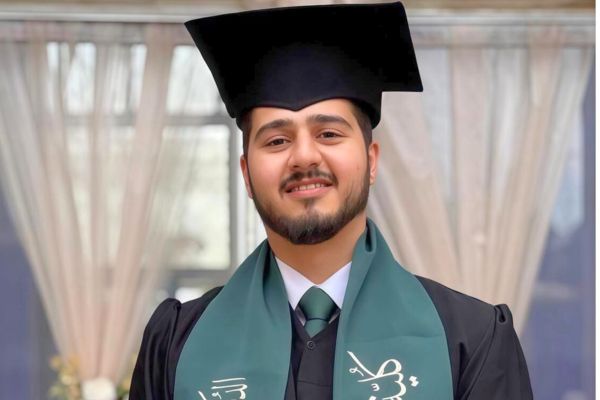
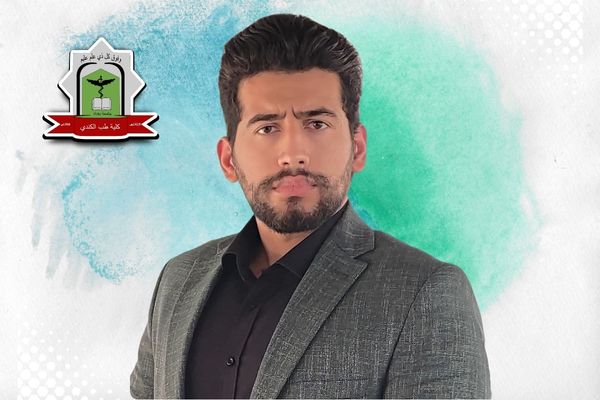

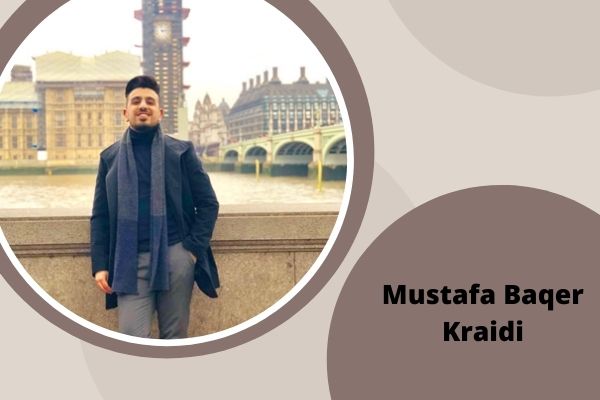
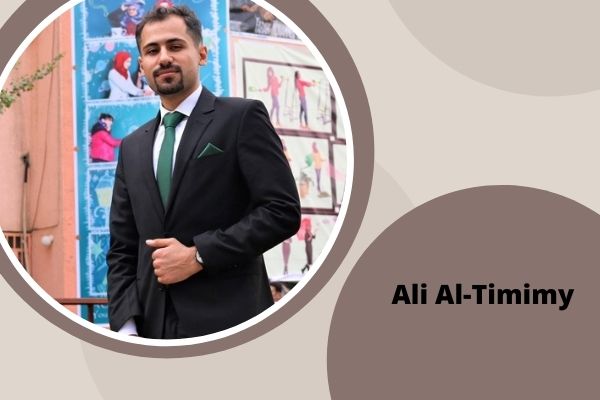
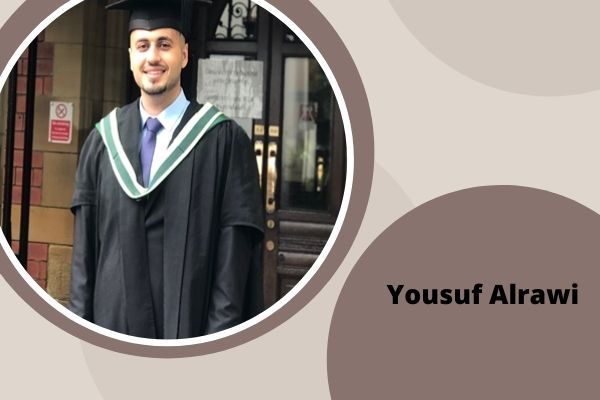
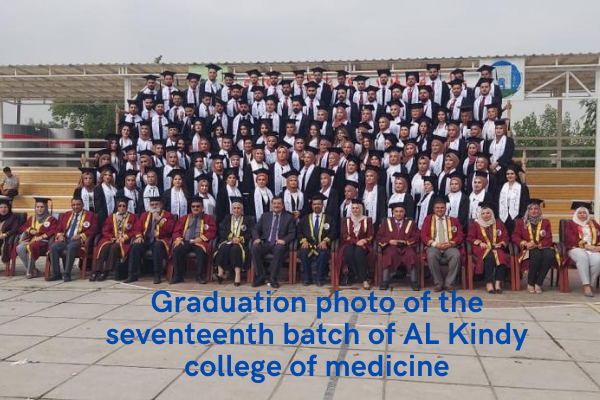

Top 3 Graduates
| Name | Rank | Graduation Year |
|---|---|---|
| Youssef Mahmoud Awsij Nael | 1 | 2005 |
| Ruwya Ru'uf Ismail | 2 | 2005 |
| Ahmad Sabah Kazim Mutlak | 3 | 2005 |
| A'laa Qasim Yahya Alatraqchi | 1 | 2006 |
| Fatima Abdul Jabbar Khalaf Alqaisi | 2 | 2006 |
| Seel Hashem Abbas Binyan Alsaedi | 3 | 2006 |
| Mohammed Abdul Hussein Lifta Hassoon | 1 | 2007 |
| Laith Saleh Hamad Farhan Al Obaidi | 2 | 2007 |
| Mustafa Jamal Zumuk Hamoud Al Rawi | 3 | 2007 |
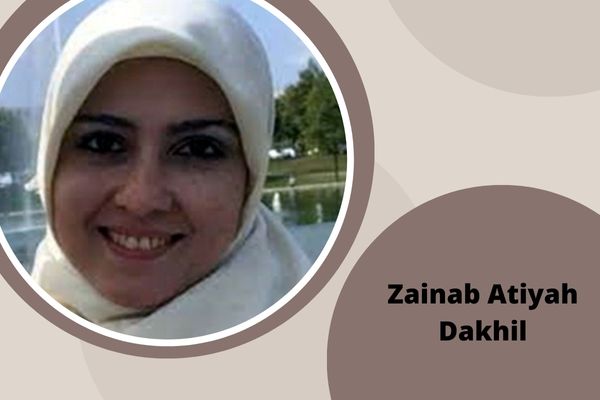
| Zainab Atiyah Dakhel Salman | 1 | 2008 |
| Taha Muwaffaq Taha Al Sheikhli | 2 | 2008 |
| Abbas Abdullah Mujalli Al Rowdhani | 3 | 2008 |
| Ali Abdul Sattar Hussein Al Khazraji | 1 | 2009 |
| Marwa Ali Mohammed Abdul Nabi Al Akeili | 2 | 2009 |
| Mohammed Natiq Abbas Hassan | 3 | 2009 |
| Samar Ahmed Jassim | 1 | 2010 |
| Shimaa Khalid Abdul Qader | 2 | 2010 |
| Zainab Farhan Saud | 3 | 2010 |
| Suja Ali Ahmed Abdul Hussein Al Kitabi | 1 | 2011 |
| Noor Rizq Hassan Younis Al Akbi | 2 | 2011 |
| Farah Salem Hamad Raja Al Jabouri | 3 | 2011 |
| Sara Luay Kazim Mohsen Al Hasani | 1 | 2012 |
| Aisha Badri Saleh Jassim Al Ani | 2 | 2012 |
| Sarah Mu'ayad Jabar Shabar Al Mousawi | 3 | 2012 |
| Ali Abdul Karim Abbas Hussein Al Nasrawi | 1 | 2013 |
| Saman Sarco Baha'a Aldin Mohammed Al Barzinji | 2 | 2013 |
| Hala Fadhil Hassan Dhirb Al Zubaidi | 3 | 2013 |
| Zaynab Al Abedin Saad Abdul Kazim Yasin | 1 | 2014 |
| Naif Laith Naif Aziz | 2 | 2014 |
| Shahad Kamal Aziz Majeed | 3 | 2014 |
| Ihab Ali Ibrahim Hamza | 1 | 2015 |
| Zahraa Rafid Hassan Abboud | 2 | 2015 |
| Shahrazad Yahya Kirdi Jallab | 3 | 2015 |
| Nada Ghazi Jado' Mohammed | 1 | 2016 |
| Aseel Adel Ali Wali | 2 | 2016 |
| Rand Hadi Sadiq Hassan | 3 | 2016 |
| Zahraa Haydar Ru'uf Mohammed Saleh | 1 | 2017 |
| Zainab Mehdi Abdul Nabi Kazim | 2 | 2017 |
| Mustafa Baqir Kazim Damij | 3 | 2017 |
| Mohammed Awn Majeed Ghadeer | 1 | 2018 |
| Tahany Rajih Abdul Ali Ahmed | 2 | 2018 |
| Mustafa Muwaffaq Hamed Heber | 3 | 2018 |
| Mo'taman Reda Mohammed Ali Hashim | 1 | 2019 |
| Ali Mahmoud Ali Mahmoud | 2 | 2019 |
| Amraa Kareem Abbas Ajeel | 3 | 2019 |
| Zahraa Imad Abdul Rahman Abbas | 1 | 2020 |
| Rahma Abdul Hadi Laybi Shamahi | 2 | 2020 |
| Rusal Ahmed Abdul Haq Abdul Jabbar | 3 | 2020 |
| Haider Faisal Ghazi Mattar | 1 | 2021 |
| Shahad Majid Hassan Ali | 2 | 2021 |
| Noor Al-Zahraa Ali Ismael Khalil | 3 | 2021 |
| Hind Nabil Nasser Fadhem | 1 | 2022 |
| Abbas Yasin Sharif Nassif | 2 | 2022 |
| Omar Fares Nawar Ahmed | 3 | 2022 |
| Hassanin Ali Abdul Aziz Ali | 1 | 2023 |
| Mustafa Luay Omran Mahmoud | 2 | 2023 |
| Hadeel Jalal Rahima Obaid | 3 | 2023 |
| Yasser Mohammed Shihab Ahmed | 1 | 2024 |
| Mohammed Ali Qais Abbas | 2 | 2024 |
| Sajad Yousif Jabbar Hashem | 3 | 2024 |
| Sand Fawaz Saleh Abd | 1 | 2025 |
| Mustafa Asim Ahmed Hassan | 2 | 2025 |
| Al-Nasir Khalid Munshid Nasir | 3 | 2025 |