Who We Are ?
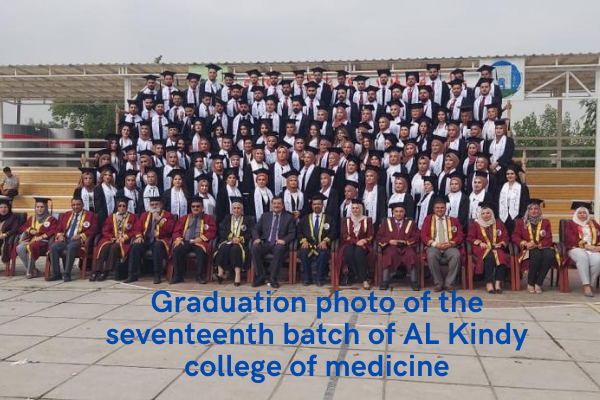
Al-Kindy College of Medicine used to follow the traditional six-year program approved by the higher committee for medical education in Iraq to graduate a physician with a bachelor’s degree in medicine, but in the last three years, the college has adopted a new training program that mostly depends on integration between basic and clinical postings with students centered approach, after gaining the approval for this academic training approach from the ministry of higher education and scientific research and the University of Baghdad since the academic year 2012-2013.
Al-Kindy College of Medicine is fully accredited by the National Council for Accreditation of Medical Colleges (NCAMC), an accrediting agency recognized by the World Federation for Medical Education (WFME)
The Post Graduate Studies started science in the academic year 2010-2011 with:
- Higher diploma in medical education in Iraq. 2010
- Higher diploma in family medicine- 2014

Al-Kindy College of Medicine used to follow the traditional six-year program approved by the higher committee for medical education in Iraq to graduate a physician with a bachelor’s degree in medicine, but in the last three years, the college has adopted a new training program that mostly depends on integration between basic and clinical postings with students centered approach, after gaining the approval for this academic training approach from the ministry of higher education and scientific research and the University of Baghdad since the academic year 2012-2013.
In addition, the College has maintained accreditation from the National Accreditation Council and the WFME Council, valid through 2029.
The Post Graduate Studies started science in the academic year 2010-2011 with:
- Higher diploma in medical education in Iraq. 2010
- Higher diploma in family medicine- 2014
Mission & Out Comes

Mission
To fulfil the goal of graduating excellent, safe, competent, and professional doctors at both the undergraduate and postgraduate levels who are dependable in providing health care services and leadership nationally and internationally.
Out Comes
Learning and practice
On completing a six-year MBChB study of an integrated student-centered learning curricular program, the medical graduate should be able to:
- Demonstrate a thorough knowledge of the human body’s structures and functions and acquire competent communication, clinical, and procedural skills consistent with the current standards in contemporary medicine.
- Follow a qualified teamwork practice.
- Enhance leadership skills as students learn to take a preventative, promotive, and curative role in medical practice.
Research
- Establish the ability of self-learning, analytical thinking, and problem-solving process in preparation for professional responsibilities and community-based lifelong learning.
- Consolidate the capacity to conduct research and pursue a postgraduate degree.
Community service and social accountability
- Hold efficiently and honestly a future post in any branch of the medical profession.
- Achieve excellence in social accountability in terms of recognition and fulfilment of community health care needs and delivery system requirements in Iraq and beyond, addressing local and global health-related intended outcomes through leadership, innovation, and collaboration.
- Adopt appropriate behavioural conduct and attitude toward patients and their families, colleagues, faculty members, and health care staff.
College Policies
Policies in a medical college are formally approved principles, rules, and guidelines that govern academic, administrative, clinical, and professional activities within the institution. They provide a structured framework for decision -making and ensure tha t all actions are aligned with the college’s mission, legal obligations, ethical standards, and educational objectives. Policies define responsibilities, procedures, and expected behaviors for students, faculty, staff, and stakeholders, ensuring consistenc y, fairness, safety, and accountability across all areas of operation.