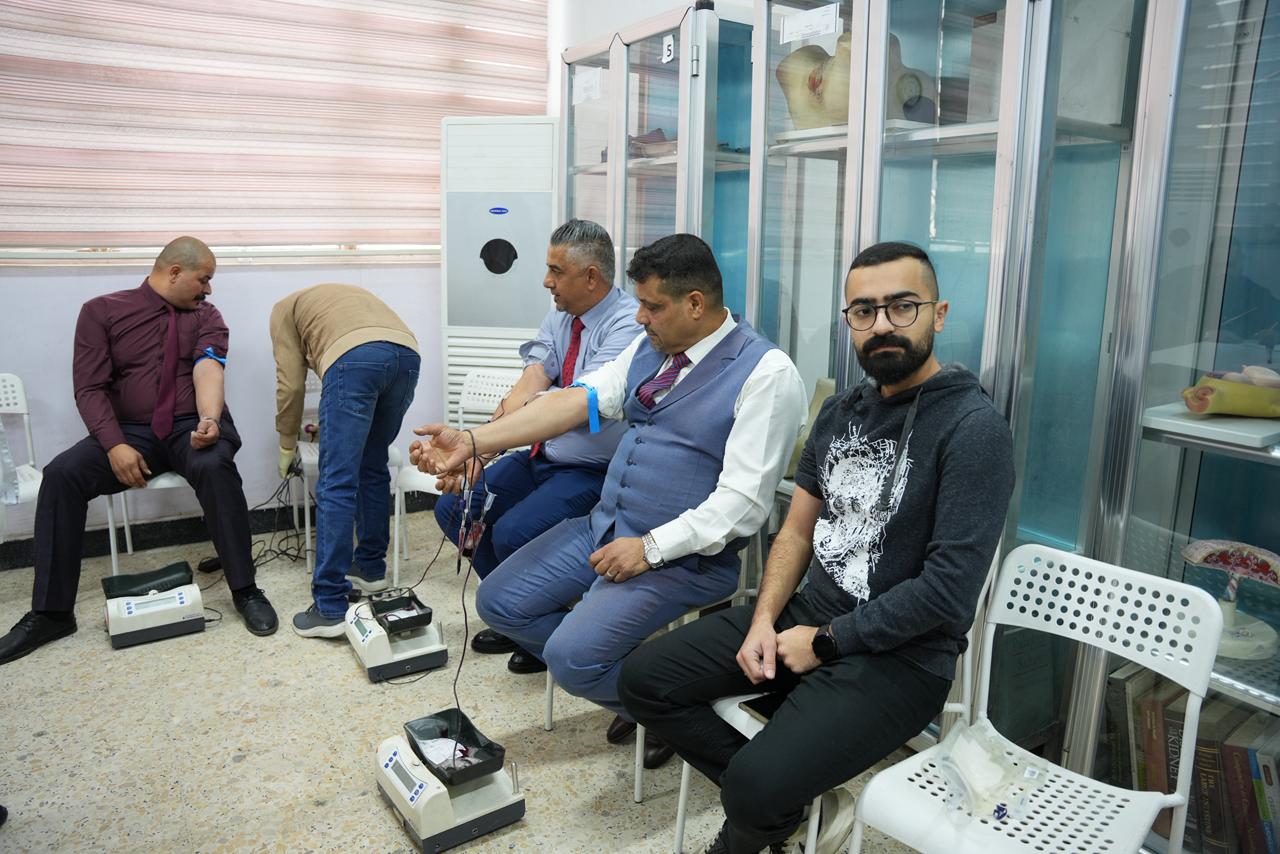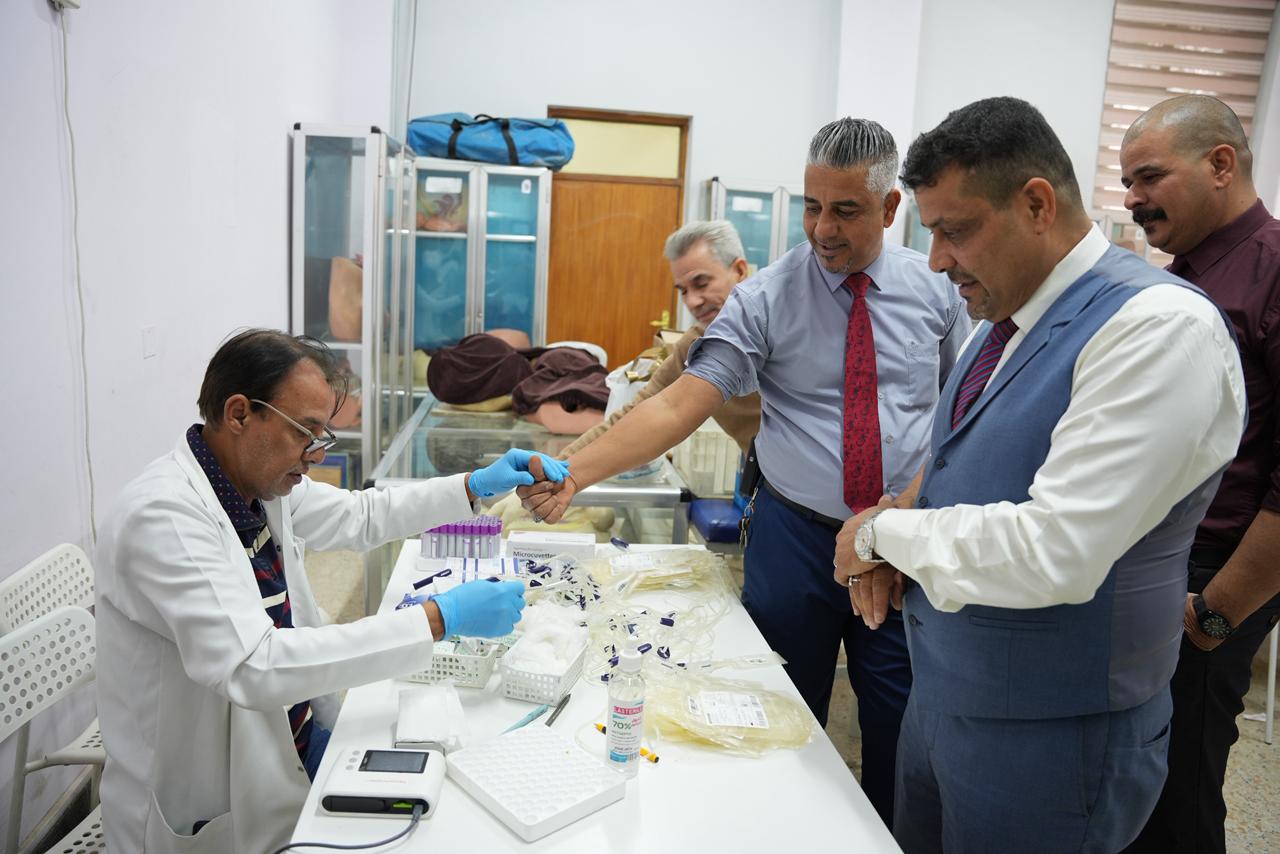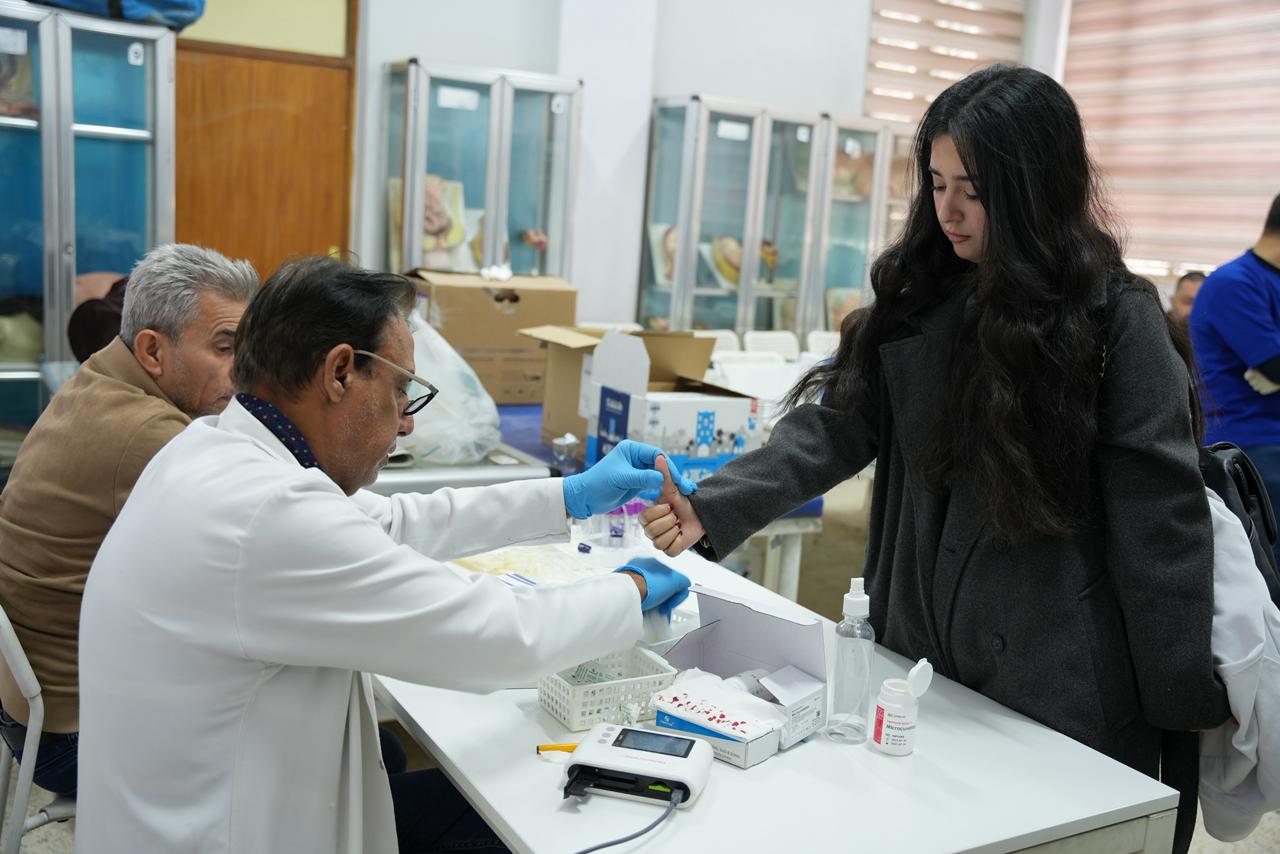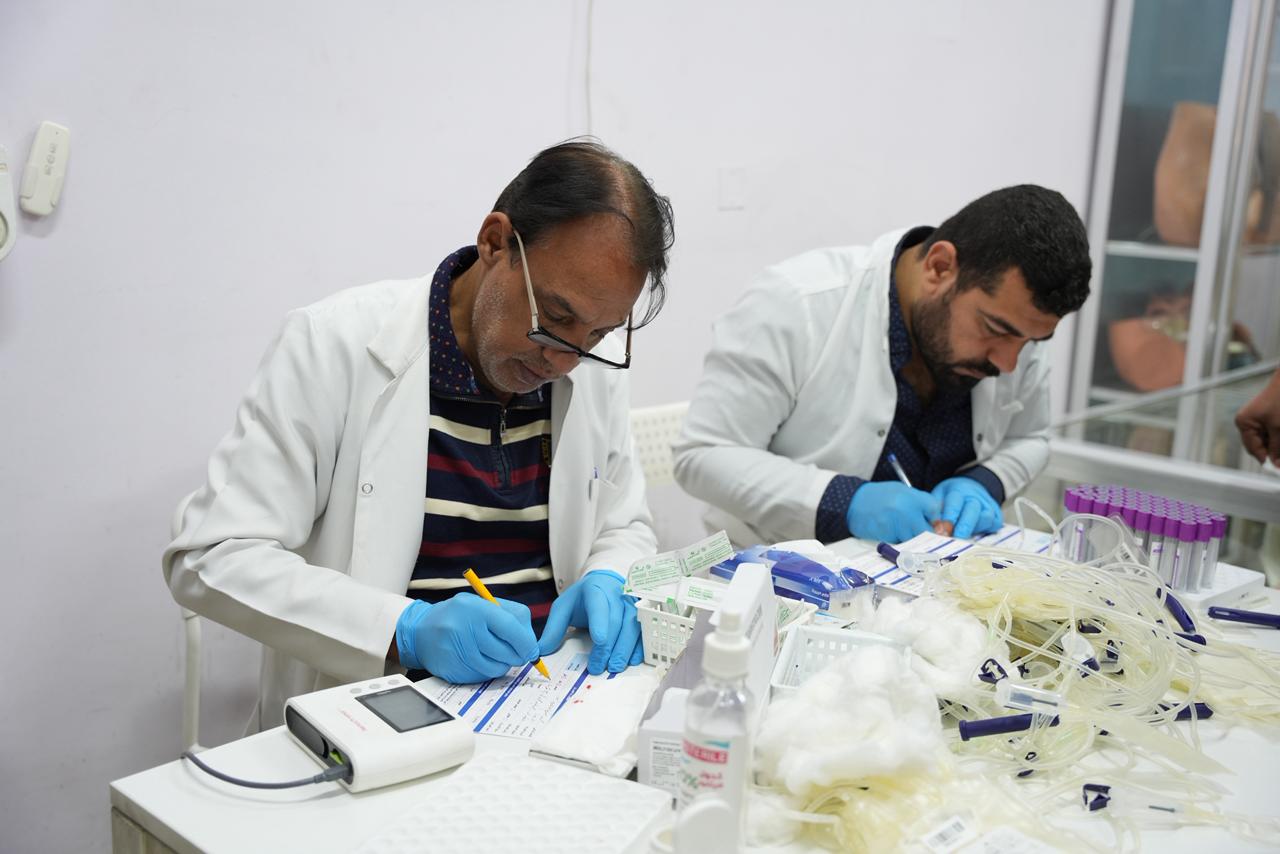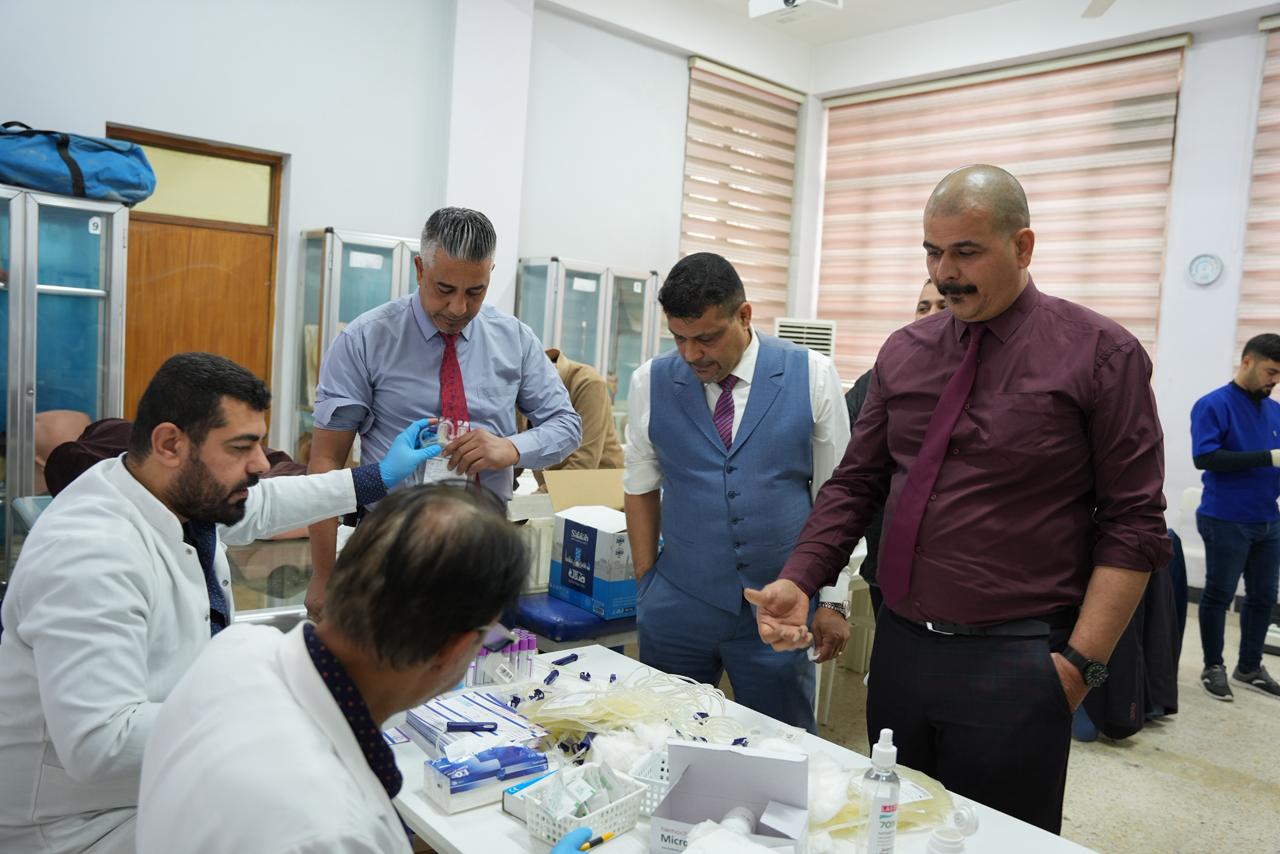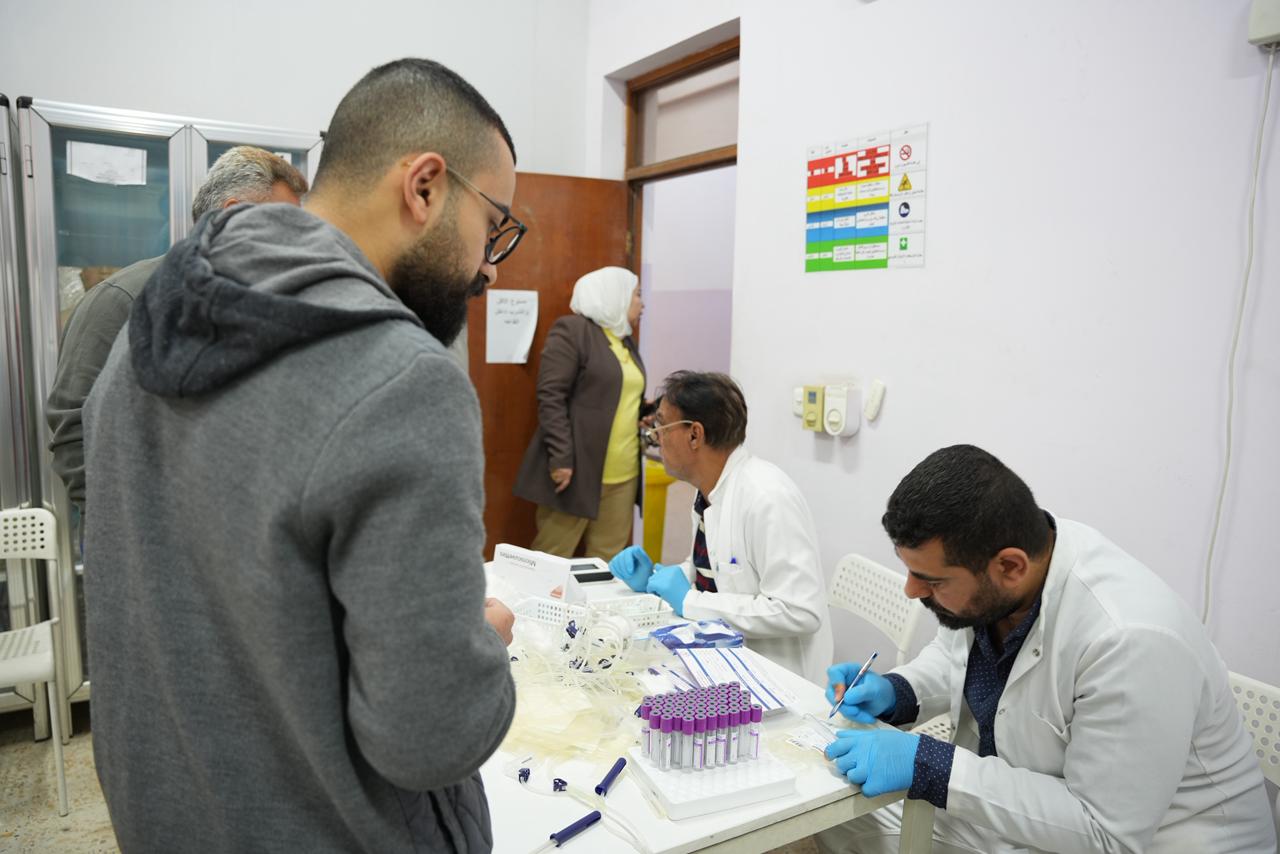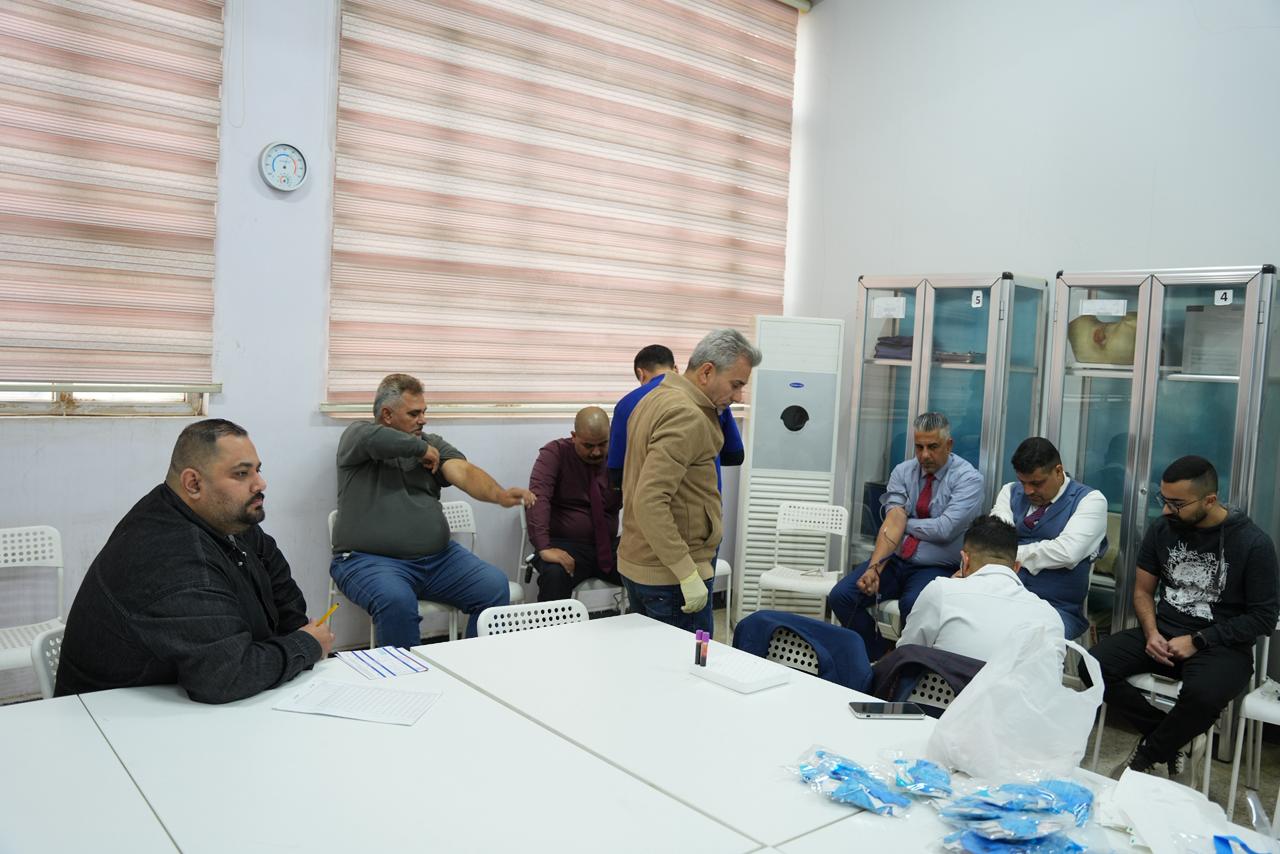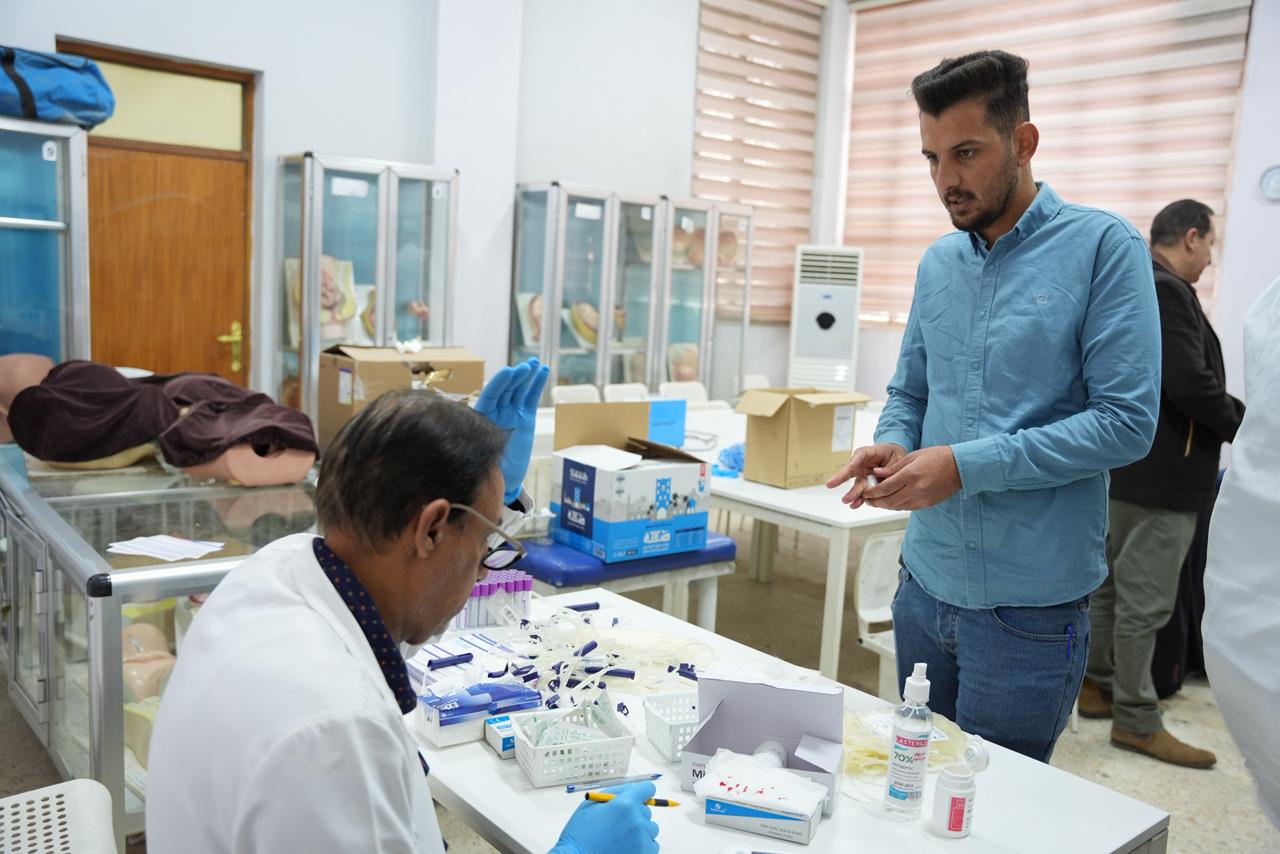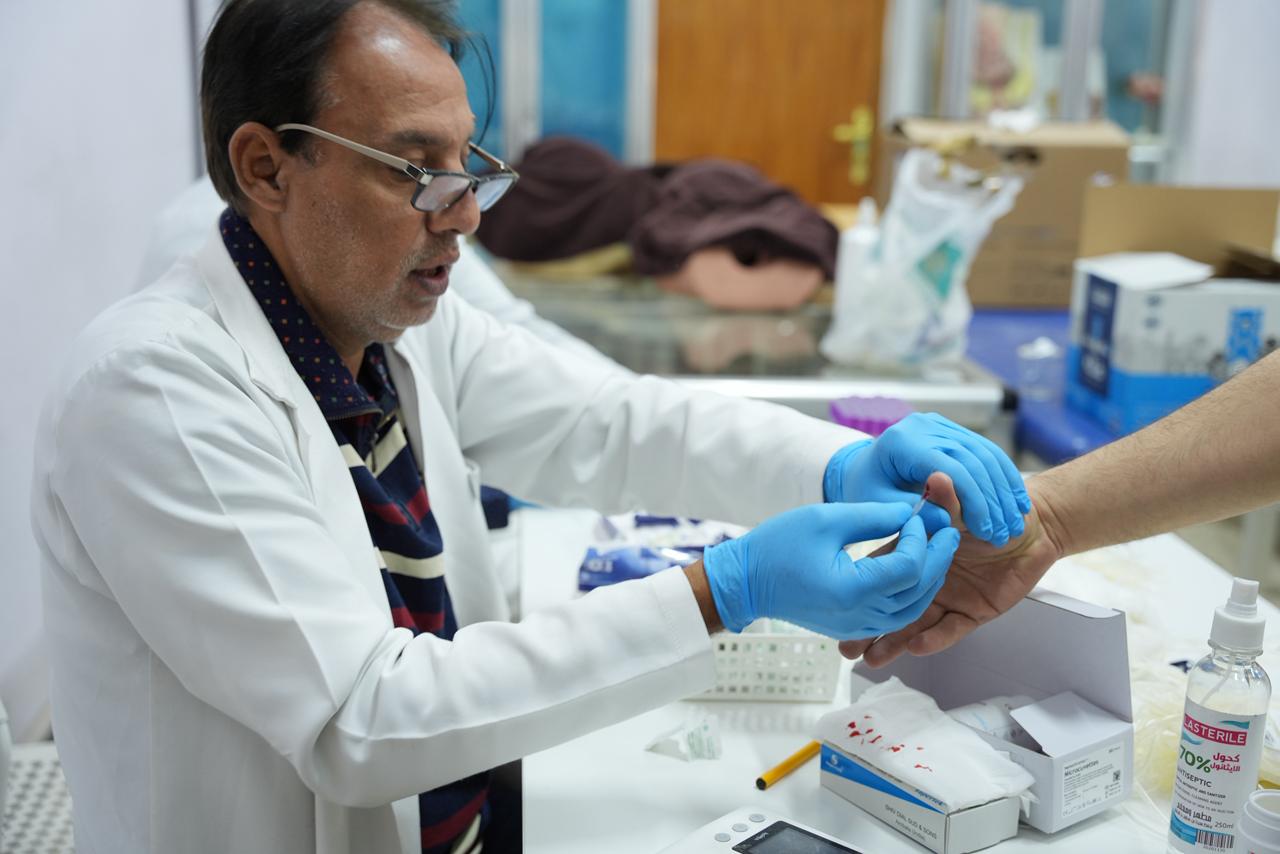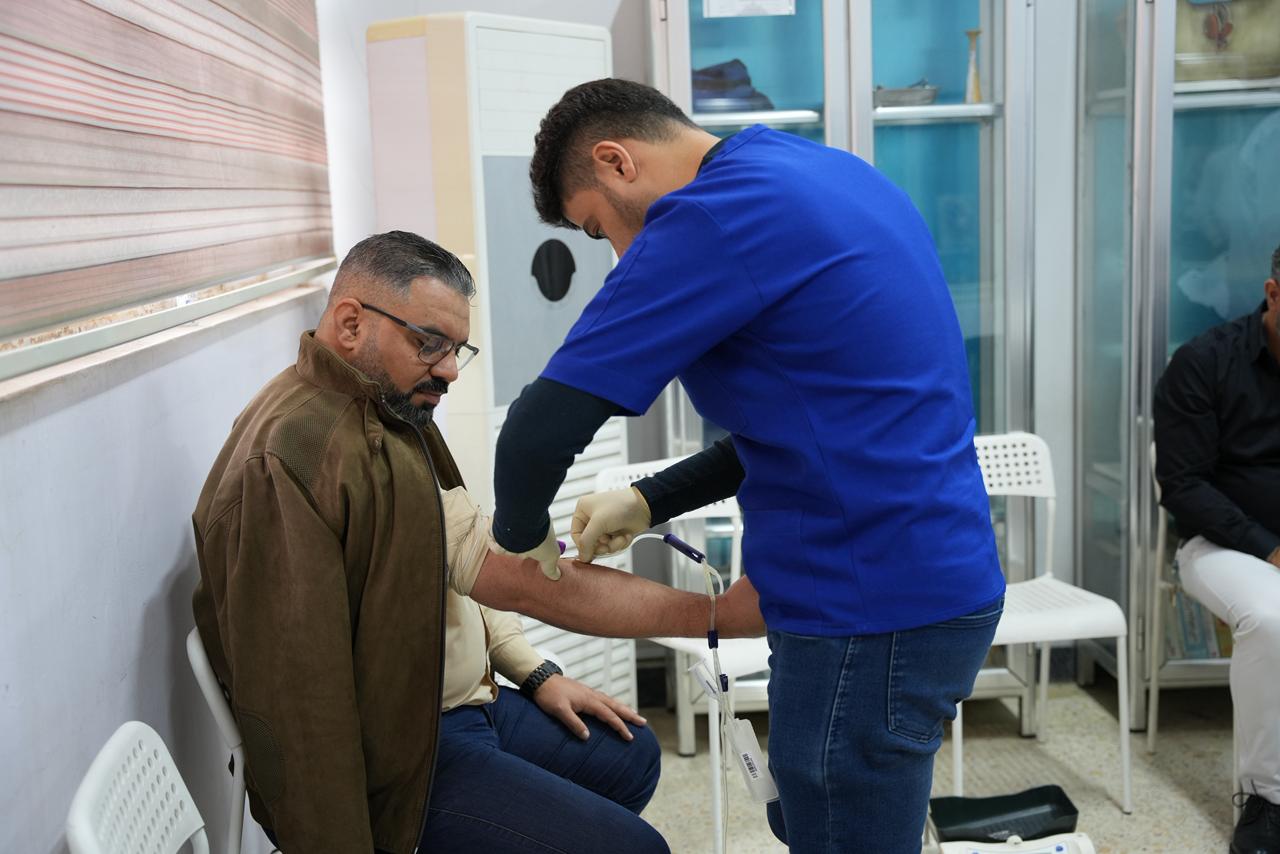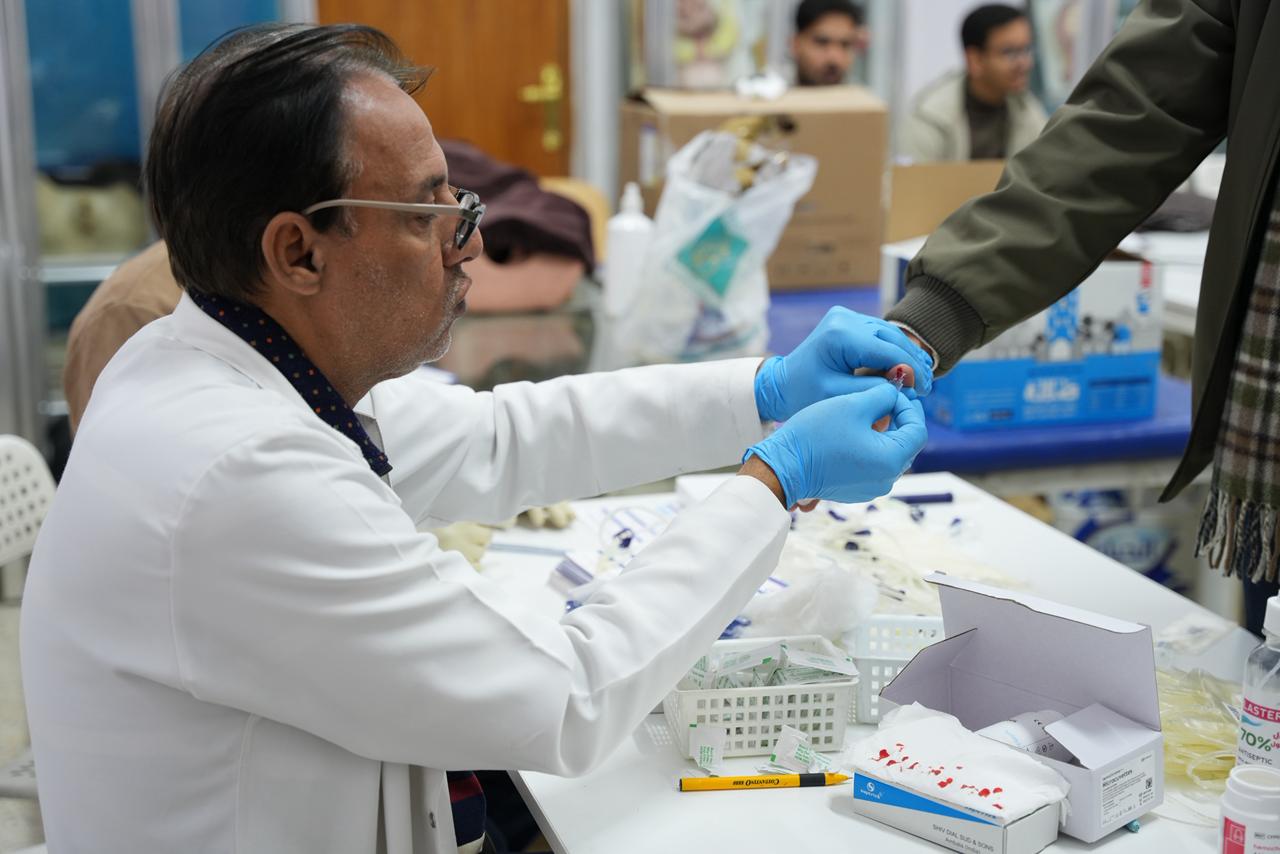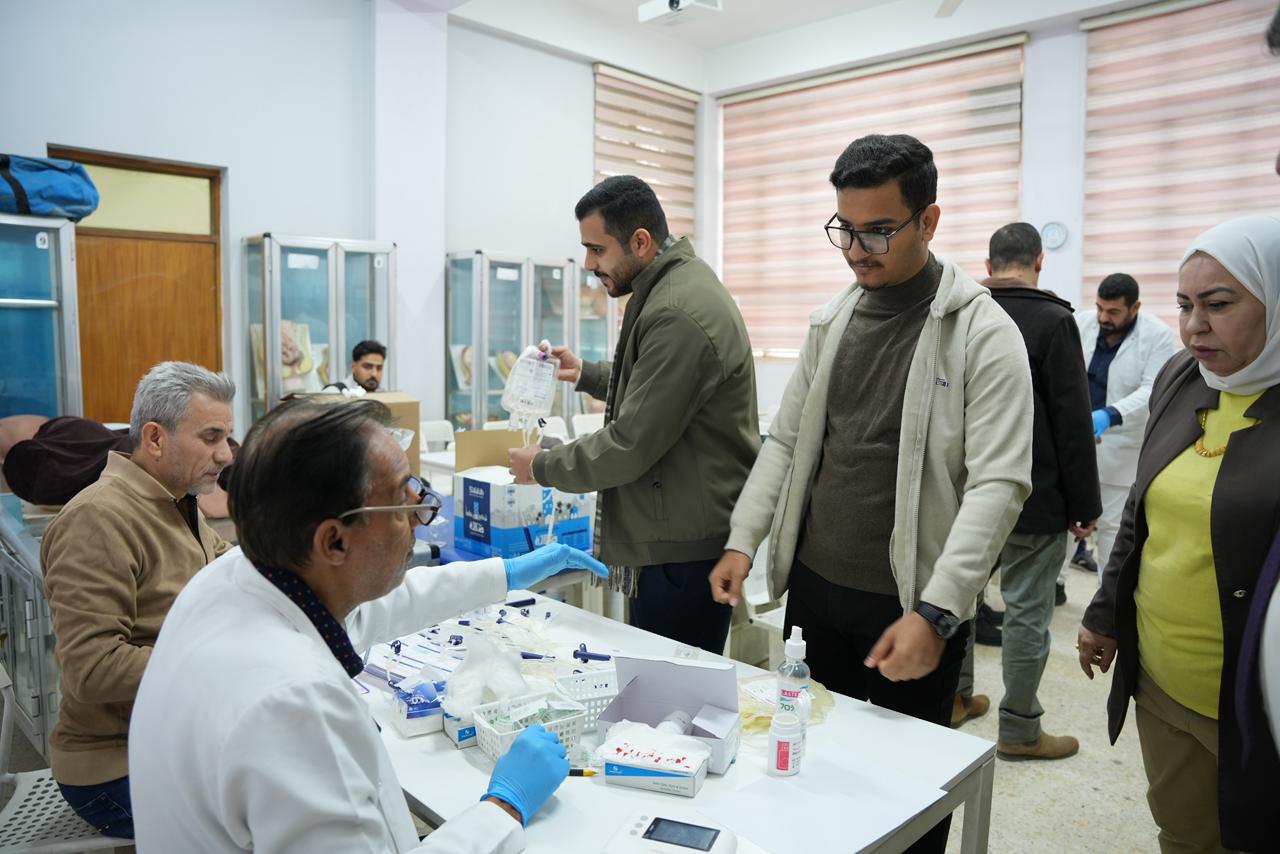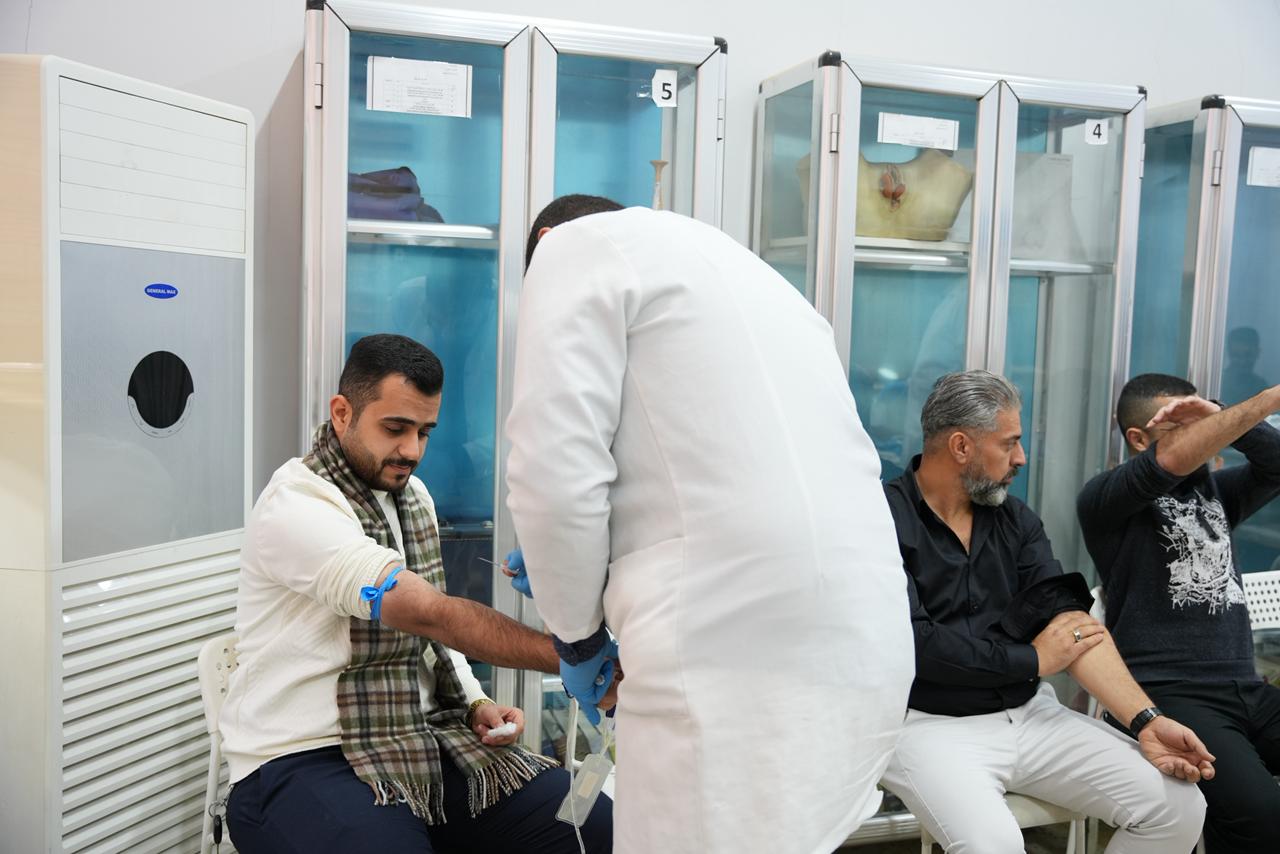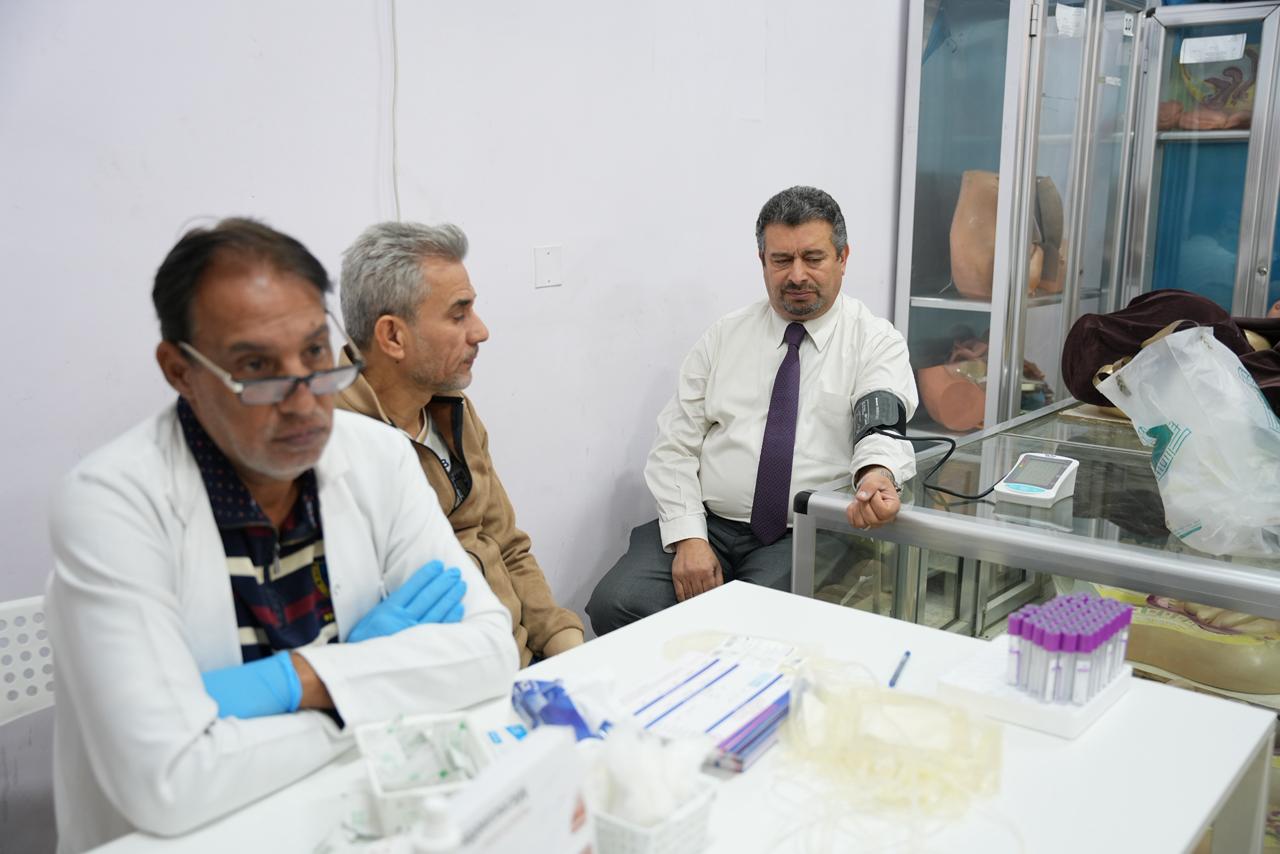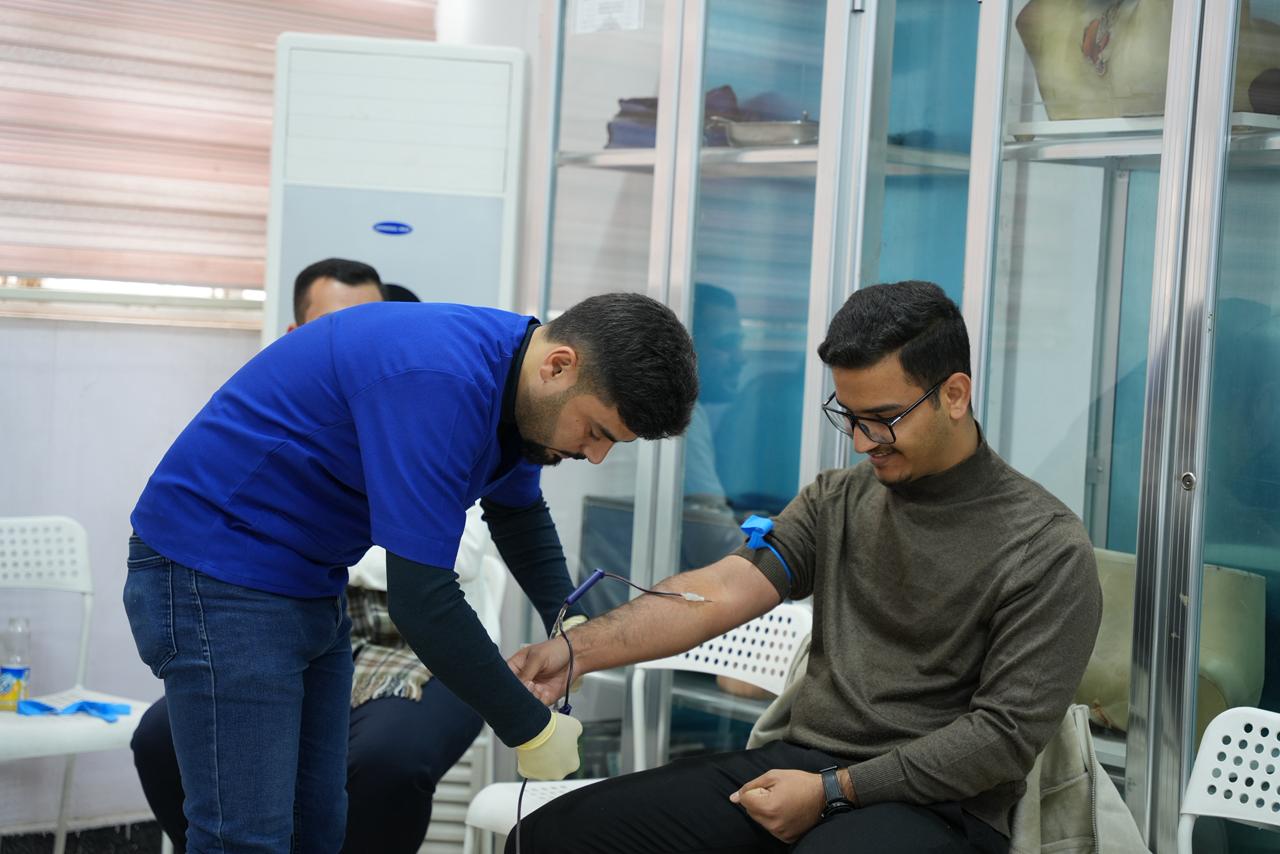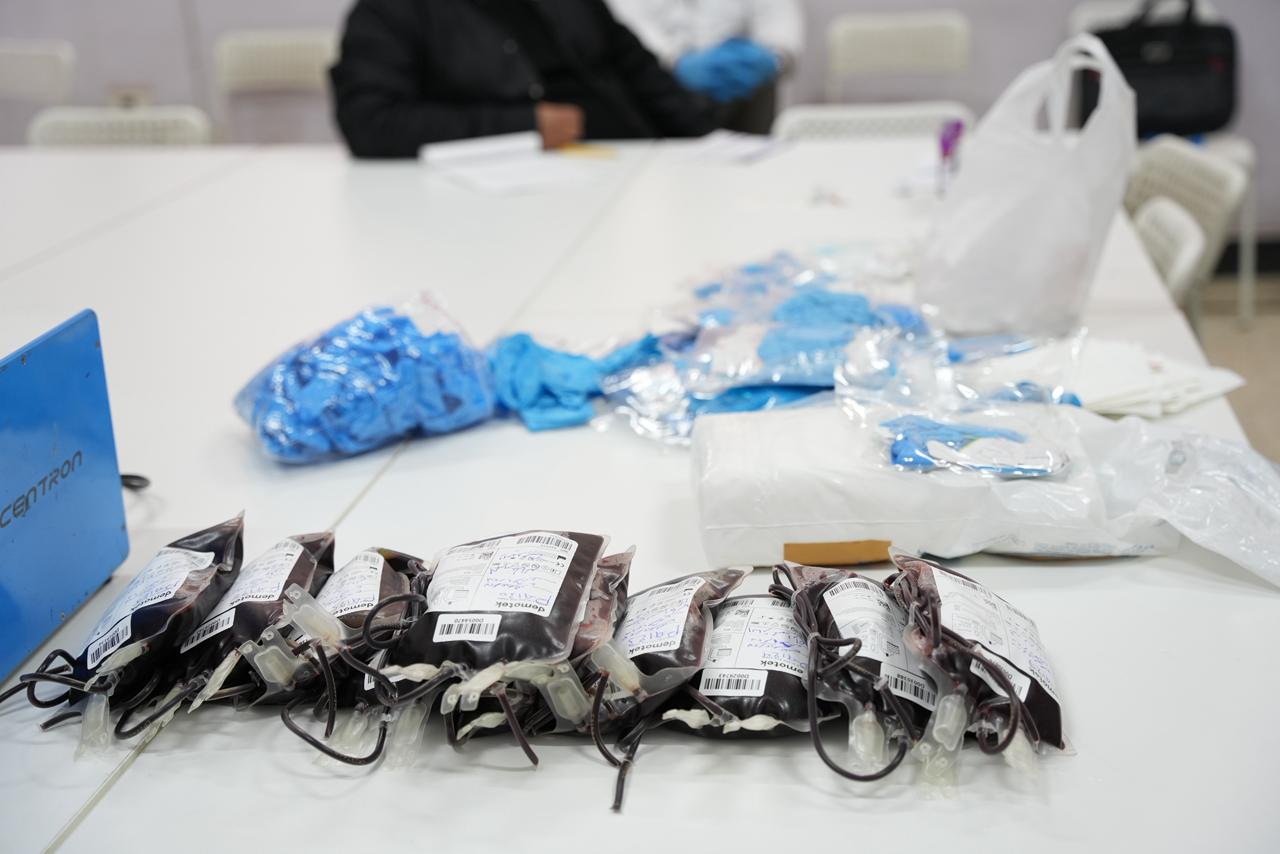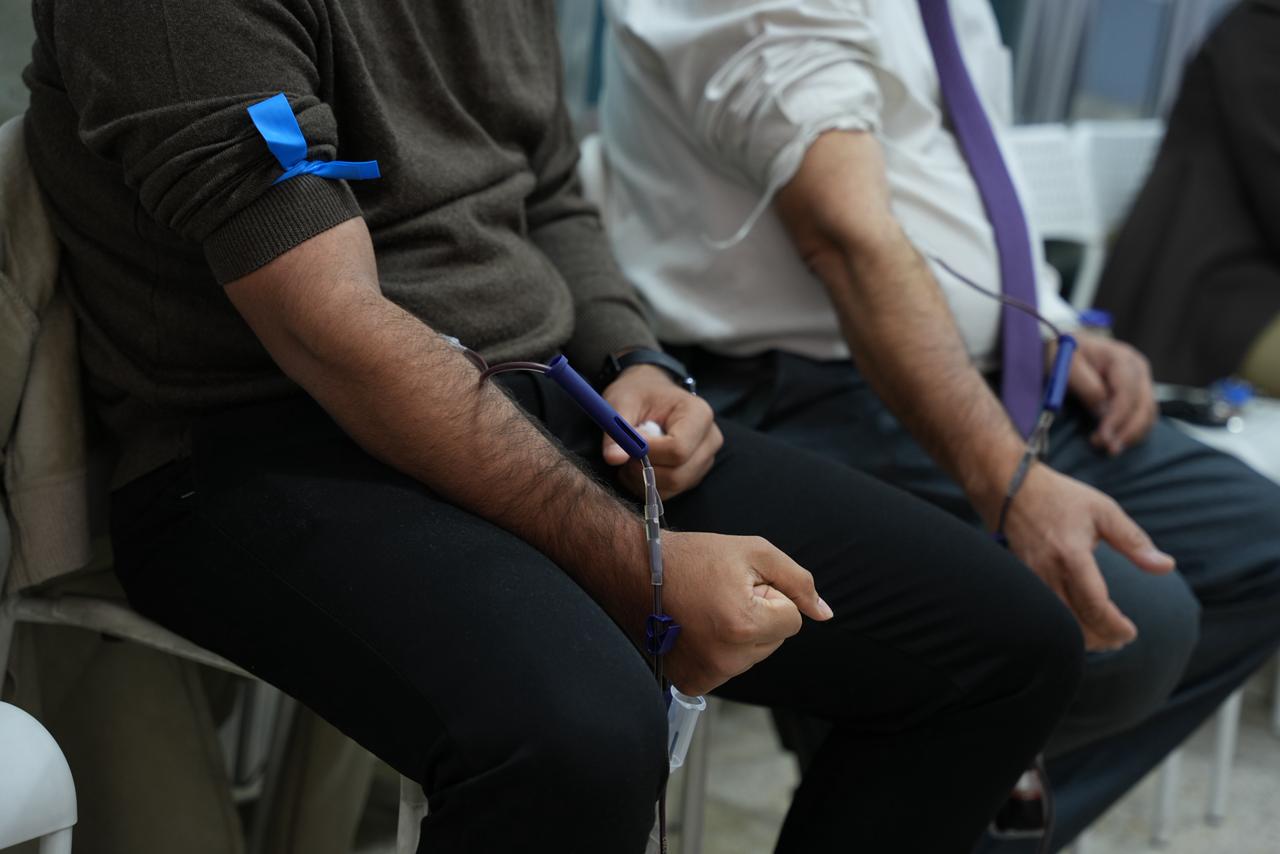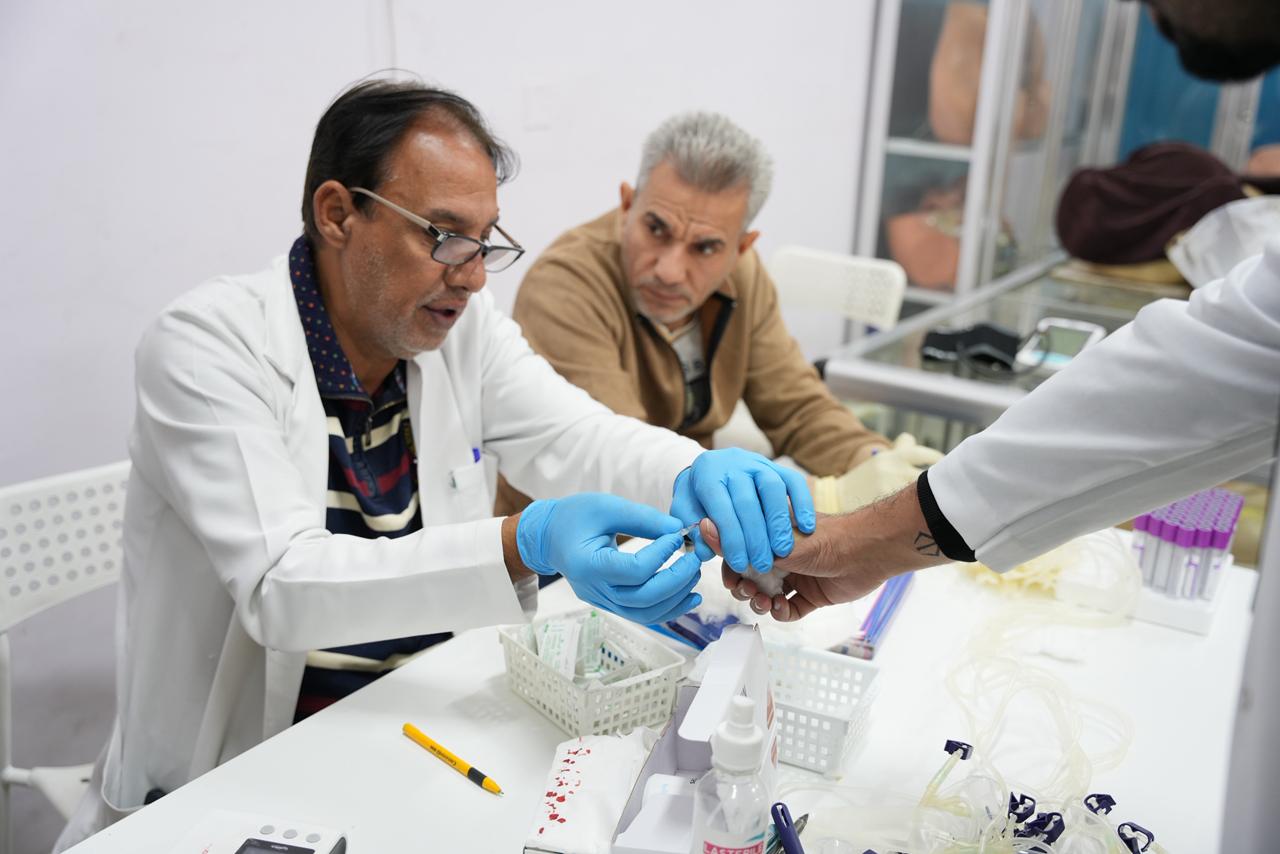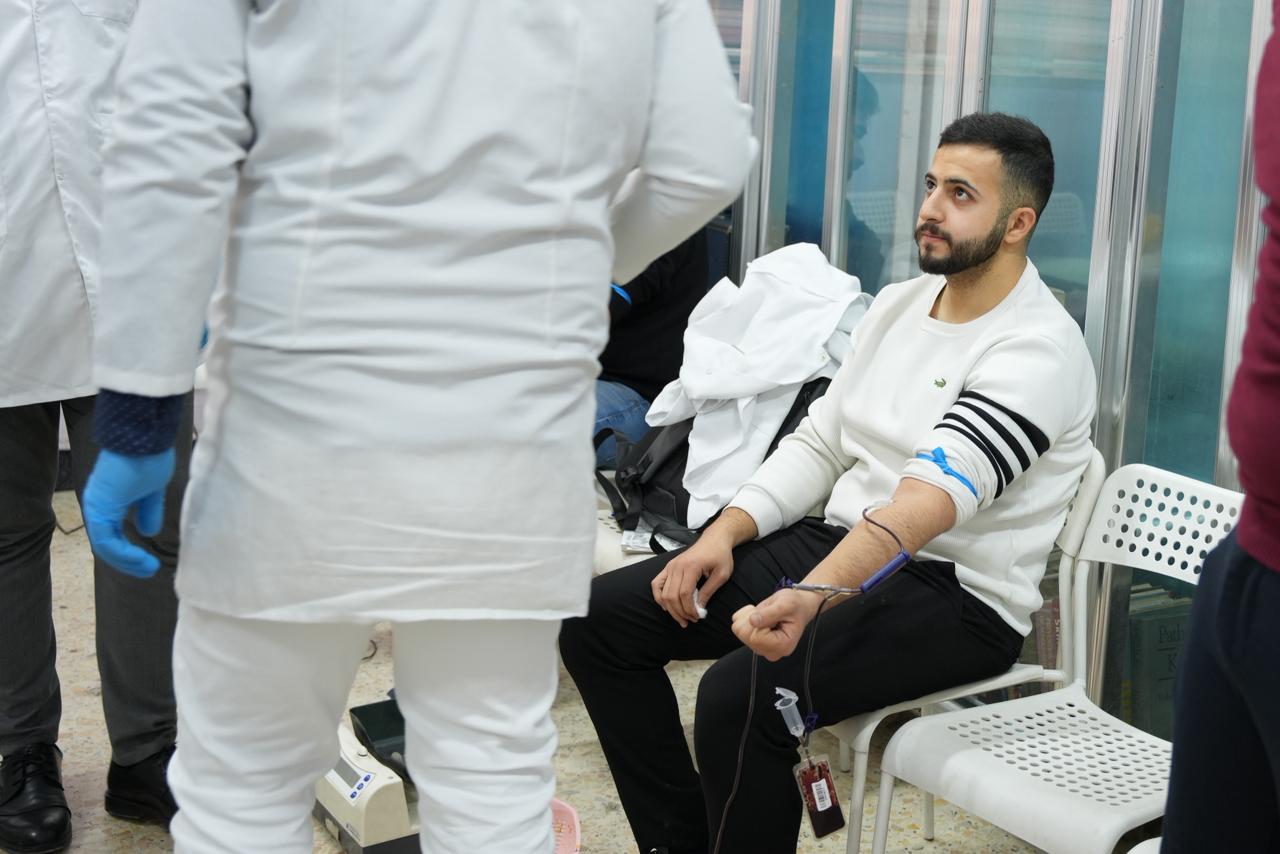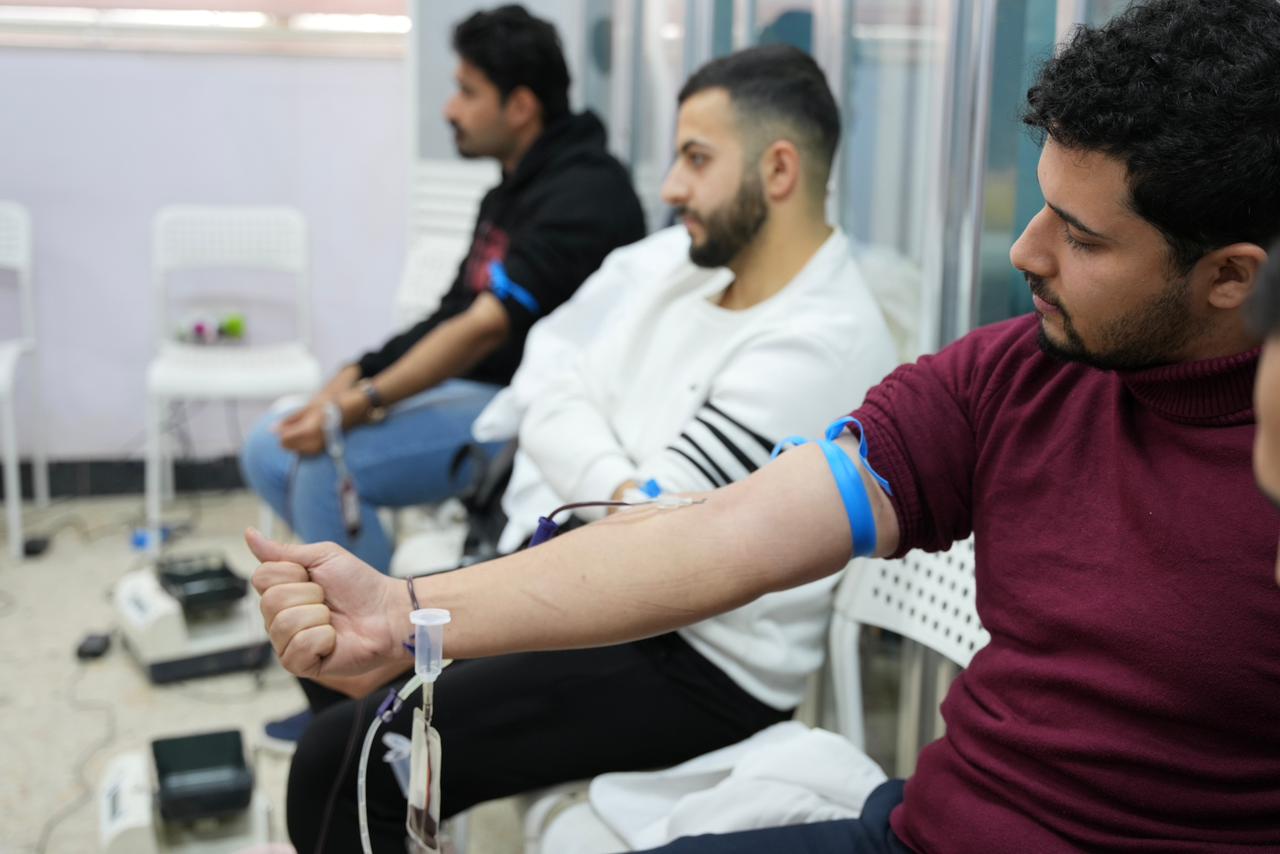
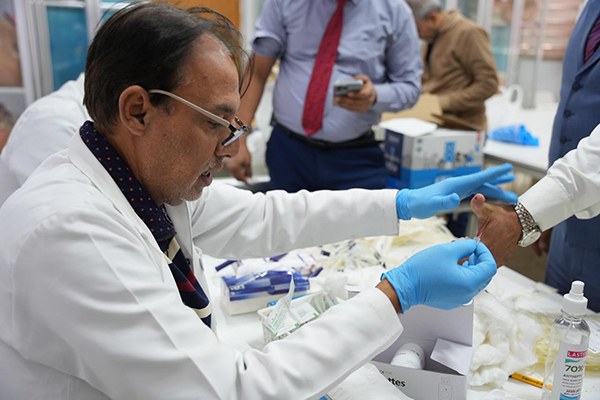
cooperation with the National Blood Transfusion Center, with active participation from Dean Prof. Dr. Mohammed Shihab Al-Aidani, along with faculty members, staff, and students. The initiative clearly reflects the College’s commitment to community service and the promotion of social responsibility across campus.
The campaign responded to pressing needs in Iraqi hospitals—particularly critical cases requiring blood and blood components, including major surgeries, acute hemorrhage, chronic anemia, hereditary blood disorders, and diverse emergencies. Donation stations were set up on campus under the supervision of certified medical teams, providing pre-donation screening, brief counseling, and post-donation observation to ensure donor safety and service quality.
Beyond its immediate clinical impact, the campaign supports the national blood supply and encourages a culture of regular, voluntary donation, strengthening values of human solidarity and health citizenship within the university. It also enhances the health system’s readiness and offers students practical exposure to the fundamentals of transfusion medicine and emergency response.
To safeguard donors, teams explained eligibility requirements and safety measures, including checks of hemoglobin level, vital signs, and a concise medical history; adherence to national standards for minimum age and weight; and confirmation of no recent high-risk exposures or acute illnesses. Post-donation guidance emphasized hydration, brief rest, and avoiding strenuous activity for 24 hours.
The College invites all community members to donate regularly and to share accurate information with peers, multiplying the positive impact on patients and public health. For upcoming drives or off-campus donations, please contact the National Blood Transfusion Center or the College’s Community Engagement/Student Affairs office.