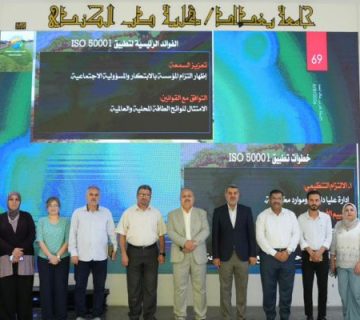

The Continuing Education Unit at Al-Kindy College of Medicine, University of Baghdad, organized a symposium titled “Early Clinical Exposure (ECE) Curriculum,” presented by Professor Dr. Abdulsalam Saleh Sultan, Communication Skills Professor at the college.
The session was chaired by Professor Dr. Lujain Anwar and attended by College Dean Professor Dr. Mohammed Shihab Al-Eidani, his assistants for scientific and administrative affairs, and faculty members.
Paradigm Shift to Human-Centered Care
The symposium highlighted ECE as a transformative transition from traditional medical education to a human-centered care model. This approach prepares physicians who understand the social, cultural, and psychological dimensions of patient experience—beyond mere disease diagnosis.
Progressive Skill Development Pathway
Dr. Sultan outlined the curriculum’s educational trajectory:
-
Phase One: Self-Exploration — Students study wellness concepts and distinguish between the physician’s disease perspective (Disease) and the patient’s suffering perspective (Illness), preparing personal ethnographic reports to enhance reflection and empathy.
-
Phase Two: Safe Environment Training — Students develop clinical communication skills through simulation and role-play in small groups before transitioning to real patient interactions.
The “Patient-Teacher” program forms the curriculum’s cornerstone. Students accompany chronic disease patients for six months through periodic home visits, understanding the patient’s social and economic reality and its impact on treatment plans and therapeutic response.
The symposium affirmed this curriculum’s vital role in strengthening the humanistic dimension of medical education, preparing physicians who possess both scientific competence and human sensitivity.